
Commercial terms
INCOTERMS® 2020
11 Rules. 1 Global Language.
Precision in the contract. Discipline in execution.
Incoterms® 2020 are the internationally recognized rules for the interpretation of trade terms. They define the responsibilities of buyers and sellers in the delivery of goods under sales contracts. They do not determine transfer of ownership or payment terms.
 Cost allocationWho pays for what.
 Risk transferWhen risk passes.
 Who arranges main carriageWho is responsible.
 Customs clearanceExport & import.
- ImportantIncoterms® do not determine ownership transfer or payment terms.
 For any mode or modes of transport
- 1EXWEx Works
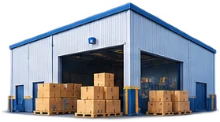
Seller makes goods available at their premises (or another named place). Buyer bears all costs and risks from that point.
- 2FCAFree Carrier

Seller delivers the goods to the carrier nominated by the buyer at the named place. Risk transfers upon delivery to the carrier.
- 3CPTCarriage Paid To
Seller pays for carriage to the named destination. Risk transfers when the goods are handed over to the first carrier.
- 4CIPCarriage and Insurance Paid To

Same as CPT, but seller also provides cargo insurance with higher coverage (ICC Institute Cargo Clauses A or equivalent).
- 5DAPDelivered at Place
Seller delivers the goods to the named place of destination, ready for unloading. Risk transfers at the named place. Import clearance and duties are paid by buyer.
- 6DPUDelivered at Place Unloaded
Seller delivers and unloads the goods at the named place of destination. Risk transfers after unloading. Import clearance and duties are paid by buyer (unless otherwise agreed).
- 7DDPDelivered Duty Paid
Seller delivers the goods, clears export and import customs, and pays all import duties and taxes, at the named place of destination. Maximum responsibility for the seller.
 For sea and inland waterway transport only
- 8FASFree Alongside Ship
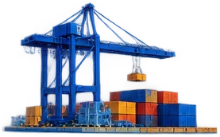
Seller places the goods alongside the vessel at the named port. Risk transfers when the goods are alongside the vessel. Buyer arranges and pays for loading and main carriage.
- 9FOBFree on Board
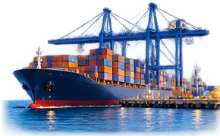
Seller delivers the goods on board the vessel at the named port of shipment. Risk transfers when the goods are on board. Not suitable for containerized cargo; FCA is generally recommended instead for containers.
- 10CFRCost and Freight
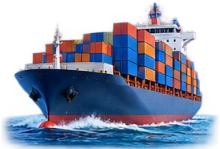
Seller pays for ocean freight to the named destination port. Risk transfers when the goods are on board the vessel at the port of shipment.
- 11CIFCost, Insurance and Freight
Same as CFR, but seller also provides minimum cargo insurance complying with ICC Institute Cargo Clauses (C) or equivalent.
Responsibility matrix – who pays, who arranges, where risk transfers
| Incoterm | Seller costs | Buyer costs | Main carriage | Customs export (clearing) | Customs import (destination) | Risk transfers when risk passes to buyer |
|---|---|---|---|---|---|---|
| EXW | At seller's premises | |||||
| FCA | When goods are delivered to the carrier | |||||
| CPT | When goods are handed to the first carrier | |||||
| CIP | When goods are handed to the first carrier | |||||
| DAP | At the named place (ready for unloading) | |||||
| DPU | After goods are unloaded at destination | |||||
| DDP | At the named place (import cleared) | |||||
| FAS | When goods are alongside the vessel | |||||
| FOB | When goods are on board the vessel | |||||
| CFR | When goods are on board the vessel | |||||
| CIF | When goods are on board the vessel |
Seller responsibleBuyer responsibleShared (depends on contract)
Key differences to know
- CIP vs CIF insuranceCIP requires higher coverage (ICC Clauses A). CIF requires minimum coverage (ICC Clauses C).
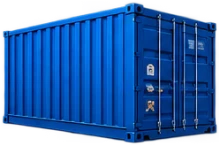 FCA vs FOB for containersFCA is generally better for containerized cargo, as risk transfers when goods are handed to the carrier at the terminal. FOB is not suitable in most container cases.
- DPU means unloadedUnder DPU, the seller delivers and unloads the goods at the named place. Risk transfers after unloading.
 Legal and practical limitsIncoterms® do not determine ownership transfer or payment terms. These are separate and must be agreed in the sales contract.
Typical trade flow – where each Incoterm ends (example: ocean transport)
premises
terminal / port
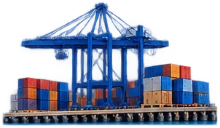
(at shipment port)
terminal / port
(warehouse)
premises
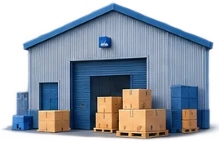
Each line ends where delivery / risk transfer typically occurs in an ocean shipment. Actual points depend on the named place agreed in the contract.

Execution standard
- Use clear trade terms.
- State the Incoterm® 2020.
- Define the named place precisely.
- Align with logistics, insurance and documentary requirements.
- Ensure all terms work together.

Common pitfalls
- Using a term that conflicts with the actual logistics.
- Assuming Incoterms® include insurance (or cover all risks).
- Ignoring local formalities and destination requirements.
- Selecting Incoterms® not suited to the mode of goods.
- Not documenting responsibilities clearly in the contract.
Trade finance considerations

Incoterms® impact documents required under L/Cs.

Terms can affect collateral requirements and payment security.
Banks finance against documents – not Incoterms®.
Use consistent terms across the contract, LC and logistics.
Trade with clarity.
Execute with confidence.
Incoterms® provide the structure. Excellence in execution creates value.
Incoterms® is a registered trademark of the International Chamber of Commerce. This summary is for general guidance only and does not replace the official ICC Incoterms® 2020 rules or legal advice. Back to Insights